
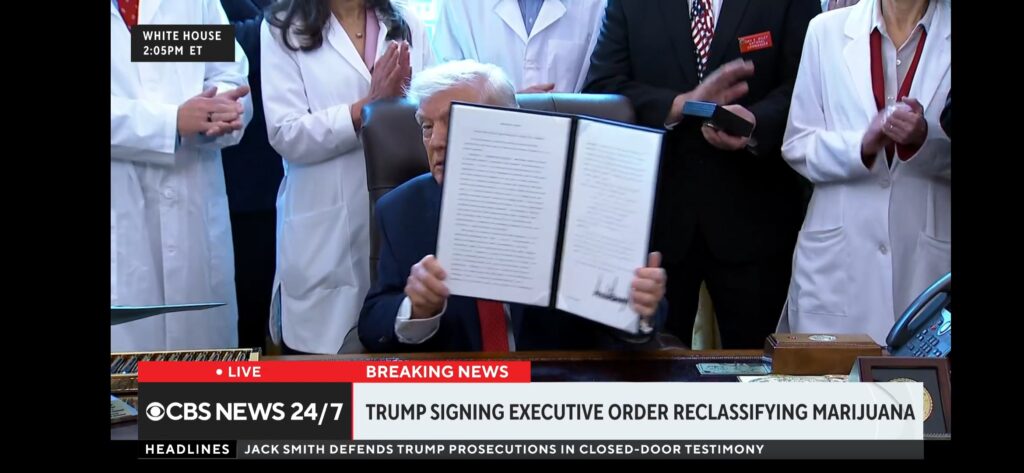
Today marks a major turning point in U.S. cannabis policy — President Donald Trump signed an executive order to reclassify marijuana under federal law, a shift that could reshape the legal cannabis landscape for years to come. AP News+1
What Changed?
Under the Controlled Substances Act (CSA), marijuana has been classified as a Schedule I drug — the strictest category, reserved for substances considered to have “no currently accepted medical use” and a high potential for abuse (the same category as heroin and LSD). Wikipedia
With today’s executive order, marijuana will now be viewed federally as a Schedule III substance — alongside drugs like codeine, certain steroids, and ketamine — which are recognized as having moderate to low potential for abuse and accepted medical uses. AP News
Important: This change does not legalize recreational marijuana at the federal level. It does open the door to new medical research, regulatory changes, and industry opportunities. AP News
Why This Matters
📌 1. Federal Recognition of Medical Use
Moving marijuana out of Schedule I signals that the federal government acknowledges its medical value. That’s a huge shift from decades past and aligns federal policy better with state laws, where medical cannabis is legal in most of the country. Reuters
🔬 2. Boost for Research and New Treatments
One of the biggest barriers to cannabis science has been red tape. Under Schedule I, researchers faced intense regulatory burdens that slowed clinical trials and drug development.
With Schedule III status:
- Universities and pharmaceutical firms can seek funding more easily.
- FDA approval pathways for cannabis-derived medicines become clearer.
- New therapeutic possibilities could be explored for pain, anxiety, sleep issues, and more. Reuters
This is huge news for patients and scientists alike — unlocking breakthroughs that were once stalled by outdated law.
💼 3. Economic and Industry Impacts
While rescheduling doesn’t instantly legalize marijuana nationwide, it eases burdens on the legal market:
- Cannabis businesses may see lower tax liabilities because some federal tax penalties tied to Schedule I status (like the infamous 280E tax code) could be reduced. Barron’s
- Investors often treat Schedule III status as less risky than Schedule I, improving access to capital and banking services.
- Increased regulatory clarity could attract new players and legitimize existing businesses. Reuters
What Still Isn’t Included
It’s crucial to understand what this order does not do:
❌ No full federal legalization — possession and recreational use remain illegal under federal law. AP News
❌ No nationwide decriminalization or automatic pardon of past convictions. AP News
❌ No instant state law impact — states will continue to control their own cannabis regulations. AP News
So while this is a historic step, it’s not the final destination for cannabis reform.
What Comes Next?
The executive order directs federal agencies — like the Drug Enforcement Administration (DEA) and Attorney General’s office — to implement the new policy, but that process will take time and public review before rules are finalized. Reuters
At We Got Gaz, we’re watching how these changes unfold — especially as they relate to medical research, CBD access, and what it means for legal, high-quality cannabis products across the country.
Why This Matters for You
Whether you’re a patient, consumer, entrepreneur, or cannabis enthusiast, today’s action represents:
🌱 More scientific freedom
💼 Stronger industry legitimacy
📊 Potential economic growth
🔬 Broader medical opportunities
This is a major milestone — one that reflects how public opinion and policy have shifted over decades of debate about marijuana’s place in society.
Stay tuned for more updates right here at We Got Gaz as federal agencies implement these changes and the cannabis industry evolves into a brighter, more accessible future.